Biography
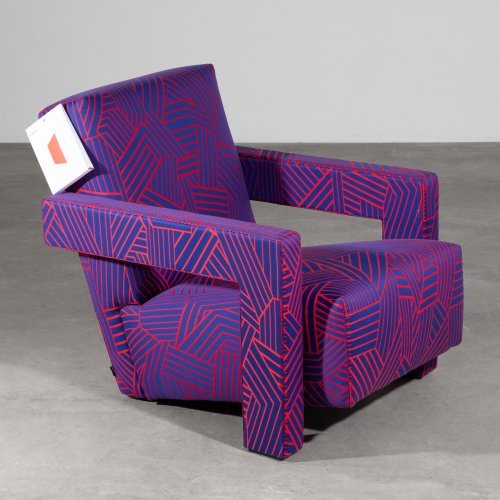
Gerrit Thomas Rietveld (1888–1964) was a Dutch furniture designer and architect, as well as a central figure in the De Stijl movement. He learned carpentry in his father's workshop in Utrecht and combined this practical skill with architectural studies at an early age. This combination of craftsmanship and theory gave rise to his characteristic design approach: clear constructions, reduction, and strict geometry.
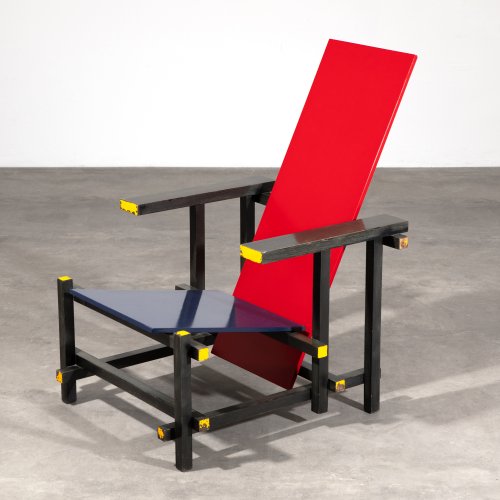
In 1919, he joined the De Stijl circle around Theo van Doesburg and Piet Mondrian and applied their principles of line, surface, and primary colors to furniture and architecture. He became world-famous with the Red and Blue Chair, whose open slatted construction and seemingly floating surfaces exemplify the principles of the movement, and with the Zig-Zag Chair, which impressively demonstrates the idea of radical simplification.
His main work in architecture is the Rietveld Schröder House in Utrecht (1924). Movable walls, open floor plans, and deliberate color accents make it a built manifesto of De Stijl ideas and a symbol of modern living. Space is understood as something changeable that can be actively used and constantly reorganized.
In the following decades, Rietveld increasingly worked on social housing projects, experimenting with standardization, prefabricated components, and affordable design. As a teacher, author, and member of international networks such as CIAM, he shaped the debates on “New Building” and passed on his ideas to subsequent generations. His work combines craftsmanship, industrial modernism, and social responsibility, making him one of the most influential figures in modern design and architectural history.
Objects by Gerrit Rietveld
-
Sold
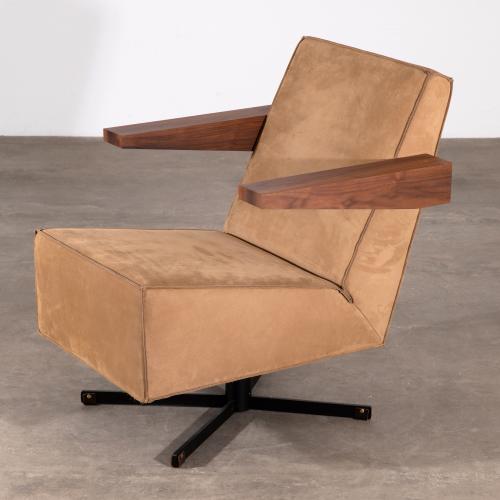
Gerrit Rietveld Rietveld Originals / Spectrum
Lounge Chair Model Pressroom Chair
Hammer Price: 1,500 €
-
Sold
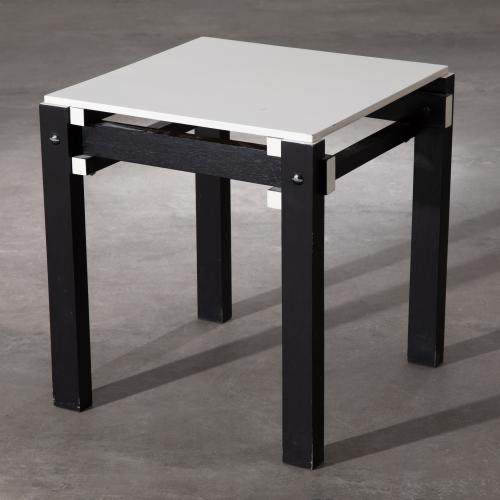
Gerrit Rietveld H. G. M., G. A. v.d. Groenekan
Hocker Modell Military Stool von HGM, GA van de Groenekan
Hammer Price: 5,400 €
-
Sold
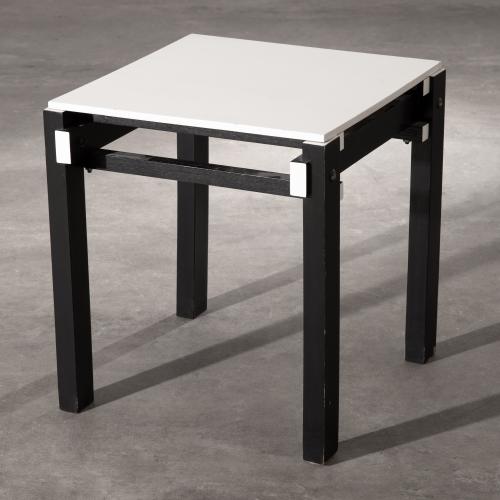
Gerrit Rietveld H. G. M. G.A.v.d. Groenekan
Hocker Modell Military Stool by H. G. M. G.A.v.d. Groenekan
Hammer Price: 5,800 €
-
Sold
-
Sold